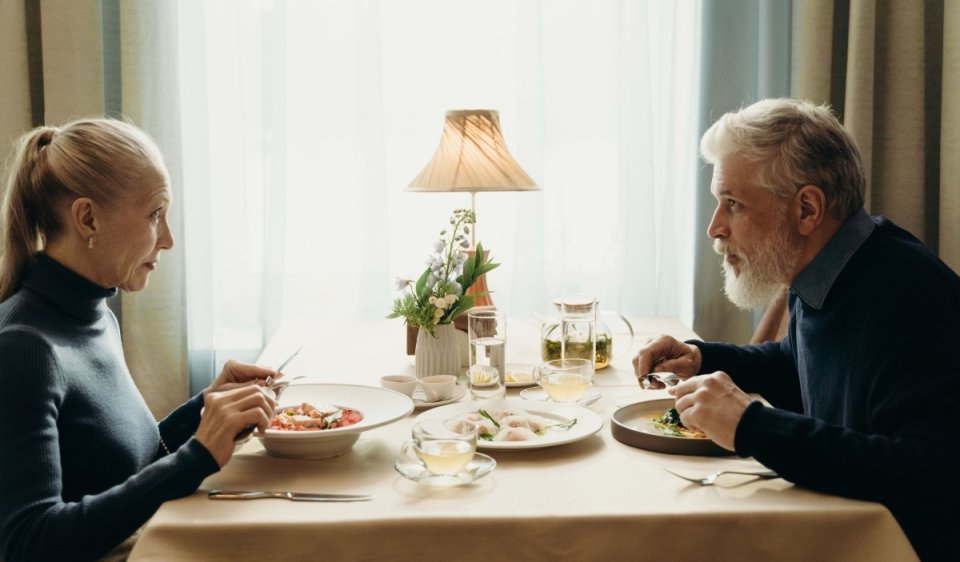
Nobody has ever felt less jealous because they were told to. This works because it doesn’t ask you to stop feeling anything. It gives the feeling somewhere to go.
Contents
- Jealousy in Relationships: The Short Answer
- Where Jealousy Actually Comes From
- Signs of Jealousy, and Which Ones Are Normal
- The Signal: One Couple’s Tool, and How It Works
- Why the Signal Works When “Just Trust Me” Doesn’t
- Where the Signal Doesn’t Work
- How to Stop Being the Jealous One
- How to Respond When Your Partner Is the Jealous One
- Jealousy in Open Relationships, and What Compersion Actually Is
- The Cousin of Jealousy Nobody Names: Resentment
- When It Isn’t Jealousy Anymore
- FAQs About Jealousy in Relationships
Jealousy in Relationships: The Short Answer
Jealousy is a request for reassurance that comes out sounding like an accusation. It almost never responds to logic, because it was never a logical problem, and telling somebody to stop feeling it works about as well as telling them to stop being cold.
What tends to work better is an agreement made in advance. A private signal the jealous partner can give in the moment, and a specific, generous response the other one has already promised to make. No argument. No explanation. NO scene in front of the neighbors.
I’m going to show you exactly how one couple I know extremely well does this. I’ll say up front that it’s one couple and one tool, not a cure, and further down I’ll tell you where it doesn’t hold. But it’s a real thing two real people worked out between them, and I’ve never seen it written down anywhere else.
Where Jealousy Actually Comes From
I’ve been listening to couples describe this since 1990, and here’s where it actually starts.
Most of it is about you, not about them. It’s a story about your own standing, that you could be replaced, that you’re not enough, that somebody better is available, and it gets projected onto whoever happens to be standing near your partner at the time.
Some of it you inherited. Victoria Joseph, the first certified matchmaker specializing in non-monogamous relationships, sees more jealousy in a month than most of us see in a year, and she describes people arriving from traditional monogamous backgrounds carrying a script: we’re so possessive, we’re so protective of what’s ours, don’t even look at him, he’s all mine. That’s not a character flaw. It’s a script you absorbed young, and it takes real work to notice you’re reading from it.
Some of it is wiring. Victoria sees every attachment style in her community, and the anxious ones show up in a very particular way, as a running worry that somebody out there is better. Those couples don’t need fixing. In her words, they just need more communication and more reassurance. A good relationship builds that in rather than treating it as a defect.
And sometimes, this is the awkward one, jealousy is simply accurate. Sometimes your partner is behaving in a way that would trouble anybody. I’ll come back to that at the bottom of the page.
Signs of Jealousy, and Which Ones Are Normal
Ordinary, human and workable:
- A flicker when your partner mentions someone by name.
- Wanting reassurance after a party, an ex’s message, a work trip.
- Comparing yourself to somebody and coming off worse.
- Catching yourself rehearsing an argument in the shower.
Every one of those is normal. I feel versions of them. The question is never whether the feeling arrives. It’s what you do in the twenty minutes after it does.
The other kind, checking phones, tracking whereabouts, interrogating after ordinary social contact, being steered away from your own friends and family, belongs in a completely different category and I deal with it at the bottom of this page.
The Signal: One Couple’s Tool, and How It Works
My sister Elizabeth has been with her husband Michael for more than thirty years and it is honestly my favorite marriage of all the marriages I have ever seen. She came on the podcast, and she told this story.
Elizabeth had been with some really jealous and possessive people in her day, so she knew going in that this was a deal breaker for her. Then, on a trip with friends, Michael got visibly jealous of a friend she’d had in her life for twenty years.
She didn’t argue with him. She didn’t defend the friendship, produce evidence, or explain why he was being unreasonable, all of which would have been fair and none of which would have worked. She took him aside and said, more or less, this:
You’re the most important person in the whole world to me, and you’ll always be the most important person in the room. If you ever feel that way again, just touch my shoulder. I’ll go off to the side with you and I’ll tell you again, looking you right in the eye, as many times as you need to hear it.
Elizabeth, Julie’s sister
She says he was never possessive again. Not once.
Here’s the shape of it, if you want to build your own version.
- A statement of standing, said out loud, once. Not “you know I love you.” The specific one: you are the most important person in this room.
- A signal agreed in advance. Hers is a hand on the shoulder. It could be a squeeze, a word, a text under the table. It has to be small enough to use in public without either of you being embarrassed.
- A promised response. She breaks off whatever she’s doing, goes to the side with him, and says it again to his face.
- Unlimited, and nobody’s counting. As many times as you need. The minute reassurance gets rationed it stops being reassurance.
Why the Signal Works When “Just Trust Me” Doesn’t
Because it never asks anybody to stop feeling jealous.
“You have nothing to worry about” has never once worked on any human being. You can’t ORDER somebody to stop feeling something, and worse, the instruction carries a judgment inside it. You shouldn’t be feeling this. So now the jealous partner has two problems, the feeling and the shame about the feeling, and shame is the fuel the whole spiral runs on.

The signal says the opposite. This feeling is allowed, it’s going to happen, and here’s a dignified way out of it. Nothing to win, nothing to defend, no scene.
And look at what it does to the job description. Instead of watching their partner, the jealous person is now watching themselves, noticing the feeling, choosing a small deliberate action. That’s an entirely different posture and it’s a far healthier one.
Elizabeth’s own conclusion is the sentence I’d frame: you don’t get anything in this world unless you ASK for it. And that comes, she says, from knowing yourself well enough to know that what’s true for you is really true for you.
She demonstrated the same instinct earlier in that same conversation, about something else entirely. Early in the marriage they had a fight where Michael needed to be right, while she was sitting there crying. She stopped and said: it doesn’t really matter who’s right or who’s wrong here, what matters is that I’m upset and I’m crying over here, and is it worth it? He said no. They never had that argument again.
Same move both times. Drop the case you were building, and name the actual stake.
Where the Signal Doesn’t Work
It worked for my sister and Michael. It has worked for clients I’ve handed it to. It is not a treatment, I’m not a therapist, and there are three situations where I’d want you to know it can fail.
When the reassurance becomes the ritual. For some couples, asking and receiving settles things and the frequency drops away over the months. For others it goes the other way: the reassurance becomes the thing the anxiety lives on, the signal gets used ten times an evening, and the underlying fear grows rather than shrinks. If you’re six months in and using it MORE than you were at the start, the tool isn’t the answer for you, and that’s information rather than failure. That’s the point to bring in somebody trained.
When the jealousy is about something that actually happened. If there’s been a betrayal, a discovered lie, or a pattern of a partner saying one thing and doing another, no signal in the world fixes that, and asking the injured person to manage their feeling more gracefully is unfair. Trust that was broken has to be rebuilt with behavior over time, not with a sentence at a party.
When you’re the one being asked to prove yourself endlessly. Generous reassurance is one thing. Being on permanent trial is another, and the difference is whether the requests are easing or expanding. I come back to that at the bottom of this page.
How to Stop Being the Jealous One
If you’re the one feeling it, four things, in order.
Say it as a feeling, not as a finding. “I felt small when you were talking to her” is a sentence your partner can do something with. “You were flirting” is a charge, and charges get defended. Same information, completely different evening.
Ask for the specific thing you want. Not “you need to be more considerate.” Try: would you come find me at some point tonight? Or: would you tell me again when we get in the car? People are far more willing than you’d think. They just can’t guess.
Catch yourself rehearsing. Brené Brown has a test for resentment that Misty O’Hara and I chewed over on the show, and it’s the most useful diagnostic I know. Her line, exactly: “What mean, critical thing am I rehearsing saying to this person?” If you’re drafting a speech in the shower, you’re not processing a feeling, you’re building a case. Notice it. Put the speech down.
Then work out where it’s actually coming from. A lot of persistent jealousy turns out to be a self-worth problem in a relationship disguise, and when that’s what it is, it doesn’t get solved inside the relationship, because the relationship isn’t where it started. That’s confidence work, and the work underneath it is a whole article of its own. But don’t force your case into that box. Sometimes the source is a betrayal that was never properly repaired, a partner whose words and actions don’t match, or something that happened to you long before this person. Those need different help, and a couple of sessions with somebody trained will tell you which one you’re in faster than a year of guessing.
How to Respond When Your Partner Is the Jealous One
Answer the question, not the accusation. Underneath almost every jealous remark is one question, and whatever shape your relationship takes it comes out roughly the same: do I still matter to you? You can answer that in four words, immediately, without conceding that you did anything wrong. Most jealousy arguments are two people fighting about the packaging while the actual question goes unanswered all evening.
Be generous, and stop rationing. I’ve heard a hundred versions of “I shouldn’t have to keep saying it.” No, you shouldn’t have to. It takes four seconds. Some people need more of it than others and that’s a need, not a debt they’re running up.
Build the signal together on a calm Tuesday. Not in the car on the way home from the party. Agree the gesture, agree the response, and then use it the first time it’s needed.
Don’t confuse reassurance with concession. Reassuring your partner is not the same as giving up friendships, handing over passwords, or accounting for your movements. The first builds a marriage. The second dismantles a person. If the requests keep growing past reassurance, read the last section on this page.
Jealousy in Open Relationships, and What Compersion Actually Is
Victoria Joseph is worth listening to here even if non-monogamy holds absolutely no interest for you, because her clients work on jealousy deliberately, out loud, as a skill.
Her first point: it does NOT disappear. Jealousy still happens, she says, it’s definitely a thing that people work through. Nobody in that world claims otherwise.
What she describes instead is a slow rewiring toward compersion, which is when you get joy and pleasure from seeing your partner having joy and pleasure with somebody else. Not gritted teeth, not putting a brave face on it. Actual gladness. She gave me an example that made it real: a friend of hers couldn’t go on a trip, so his wife went with somebody in a completely different tax bracket, off on yachts and the rest of it, and he was simply happy for her. That, she said, is where compersion comes in.
I’ll also give you the reframe I’ve taken from her and made my own, because I think it travels well beyond her community. When your partner comes back having learned something new with somebody else, the reflex is to hear it as a verdict on you. Victoria’s instinct is the opposite. Instead of being upset about it, she says, ask how you can get there too. What did they do? Make it a learning experience. I’d apply that to a cooking class or a conversation style or anything else a spouse picks up out in the world without you.
And her third point, which surprised me: she thinks securely attached people are over-represented in her community. Not because the arrangement produces security, but because it demands it. If you want the full picture of how those agreements get built, I’ve written it up in ethical non-monogamy.
The Cousin of Jealousy Nobody Names: Resentment
Misty O’Hara said something on the show I keep coming back to. She lives in a polyamorous household with her husband of thirty-one years and her boyfriend of seven, and even there, with everything agreed and out in the open, she still gets a small sting when her husband does something sweet for his girlfriend that he hasn’t done for HER lately.
Her method for handling it is my favorite piece of self-management I’ve heard all year. She says it to herself directly: please don’t be a hypocrite. You’ve obviously done things for your boyfriend that you haven’t done for your husband.
And then she pulls back, breaks it down, opens it up and looks at why she’s thinking that way, and she says it becomes a lot easier to swallow. She didn’t deny it or stuff it down. She just cut it to its actual size, which turned out to be small.
The other Brené Brown line we read out that day applies to every single person reading this, and here it is in her exact words: “Comparison is the crush of conformity from one side and competition from the other. It’s trying to simultaneously fit in and stand out.”
Read that twice. That’s the machinery of jealousy right there, and it explains why the feeling is so exhausting. Your own head is asking you to be like everybody else and better than everybody else at the same time.
When It Isn’t Jealousy Anymore
I’ll be plain, because this is the part that matters most.
Everything on this page assumes two people who love each other, one of whom is having a difficult feeling. That’s ordinary and it’s fixable.
But there’s a point where the behavior stops being about a feeling and starts being about control. Checking phones and messages. Needing to know where you are at all times. Interrogating you after ordinary conversations. Steering you away from friends and family until your whole world has quietly shrunk down to one person. All of it framed as love.
That isn’t jealousy asking for reassurance. That’s a pattern, and reassurance feeds it rather than settling it, because the requests get bigger and never smaller. If any of that sounds like your relationship, please read red flags in a relationship, and then talk to somebody who isn’t the person you’re worried about. And if you’d like to see what the opposite looks like, my green flags piece is the happier companion to it, alongside the qualities of a healthy relationship.
For everybody else: the feeling is NORMAL, it’s workable, and the fix is far smaller than you think. Agree the signal. Answer the real question. Be generous with the reassurance and stop keeping score.
One last thing and then I’ll let you go. The reason I keep coming back to my sister’s story isn’t only that the tool works. It’s that she ASKED. She felt her husband go quiet and prickly next to her, and instead of filing it away to bring up three weeks later in an argument about the dishwasher, she took him aside and said the true thing out loud.
I’ve watched her do that everywhere. In business, with her kids, and through the year the two of them lost their entire live-events company in a single afternoon in March 2020. There’s a photograph of them on a beach a few weeks later, holding onto each other and crying, with no idea what came next.
They got through it on tiny things. Coffee brought to each other. Stuffed animals around the house to make each other laugh, which sounds ridiculous written down and is exactly the sort of ridiculous that carries people.
I’ve watched that marriage for three decades and it’s the reason I’m any good at my job. If there’s a person you’d want beside you on that beach, go tell them so today.
The sense of not quite being enough that keeps producing the feeling in the first place — that’s the work that changes everything else. Come talk to me about it. An hour, privately, and we’ll find the bottom of it together.
FAQs About Jealousy in Relationships
What causes jealousy in a relationship?
Usually a gap between how secure you feel and how secure you actually are, a story about being replaceable that gets projected onto whoever is standing near your partner. Some of it is an inherited possessiveness script absorbed young. Some of it is attachment wiring: anxiously attached people need more explicit reassurance, which is a need rather than a defect.
How do you stop being jealous in a relationship?
Say it as a feeling rather than an accusation, ask for the specific reassurance you want, and agree a signal in advance so the feeling has somewhere to go in the moment. Then work out where it’s really coming from. Often it’s a self-worth issue that won’t resolve inside a relationship it didn’t start in, but it can equally be an unrepaired betrayal or a partner whose words and actions don’t match, and those need different help.
Is jealousy normal in a relationship?
Yes. A flicker when your partner mentions somebody, wanting reassurance after a party, comparing yourself unfavorably to someone. All ordinary and human. What matters isn’t whether the feeling turns up, it’s what you do in the twenty minutes afterwards.
How do I deal with a jealous partner?
Answer the real question, which is do I still matter to you, rather than the accusation wrapped around it. Be generous with reassurance rather than rationing it, and build an agreed signal together on a calm day rather than mid-argument. Then watch the direction of travel: if the requests ease over the months you’re on the right road, and if they keep expanding, reassurance isn’t the answer and it’s time for outside help.
What’s the difference between jealousy and possessiveness?
Jealousy is a feeling and it asks for reassurance. Possessiveness is a behavior and it asks for CONTROL. Reassurance settles the first and feeds the second, because the demands keep growing. If they escalate rather than ease after you’ve reassured somebody, you’re no longer dealing with a feeling.
Does jealousy go away in an open relationship?
No, and nobody experienced in non-monogamy claims it does. What they describe is a gradual rewiring toward compersion, which is genuine joy at a partner’s pleasure with someone else. It takes constant communication and a great deal of time, and plenty of couples never get all the way there.
julieferman.com · Julie@JulieFerman.com · 805-371-9557